红
红
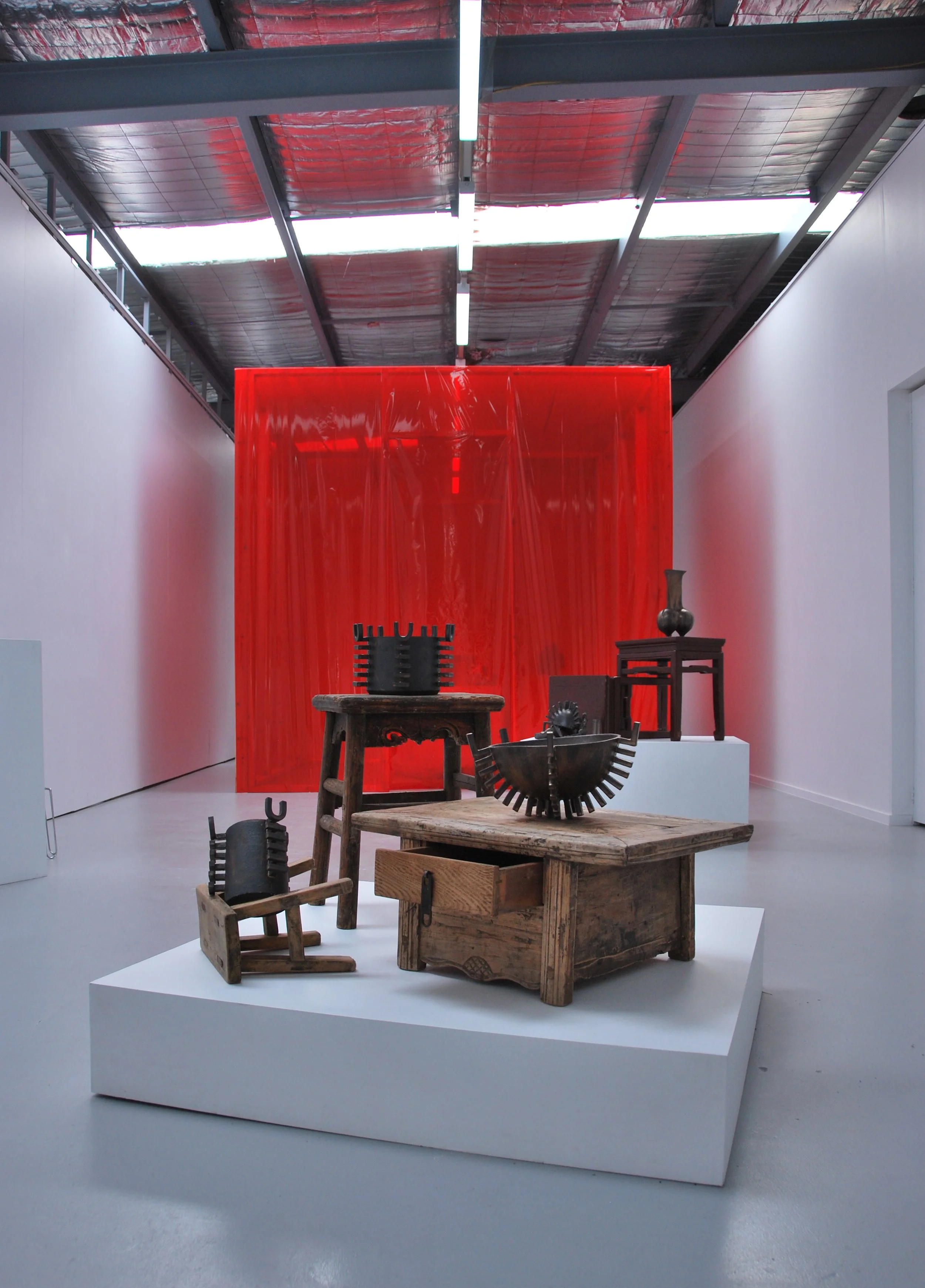
红, (hóng) ‘red’ in Chinese, offers a deeply introspective and forward-looking exploration of identity, personal growth, and transformation. Drawing from the artist’s upbringing in a Chinese-Catholic household, this exhibition is a reclamation of cultural, religious, and personal themes—touching on queerness, chronic illness, and mental health—as they intersect with the artist's evolving practice.
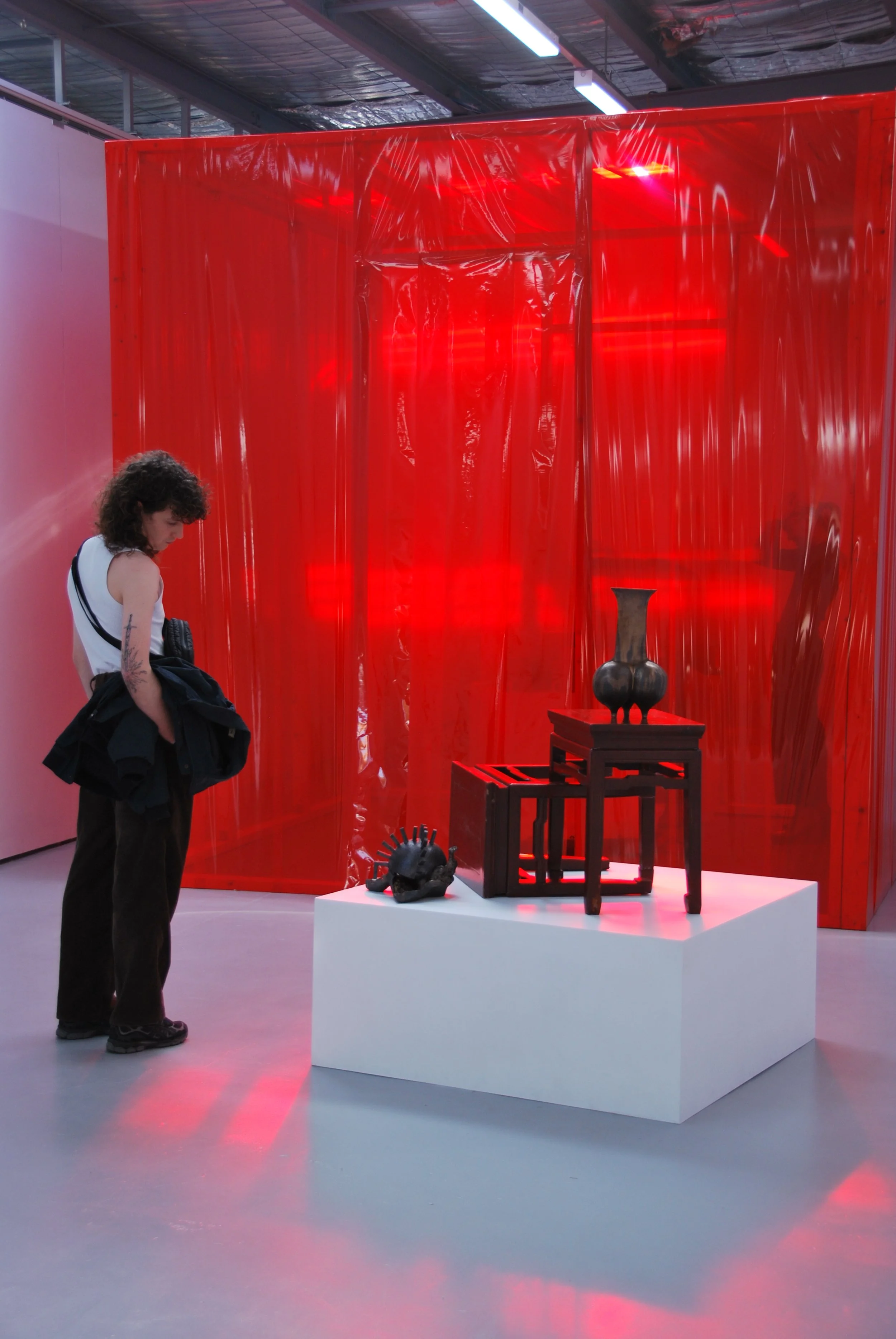
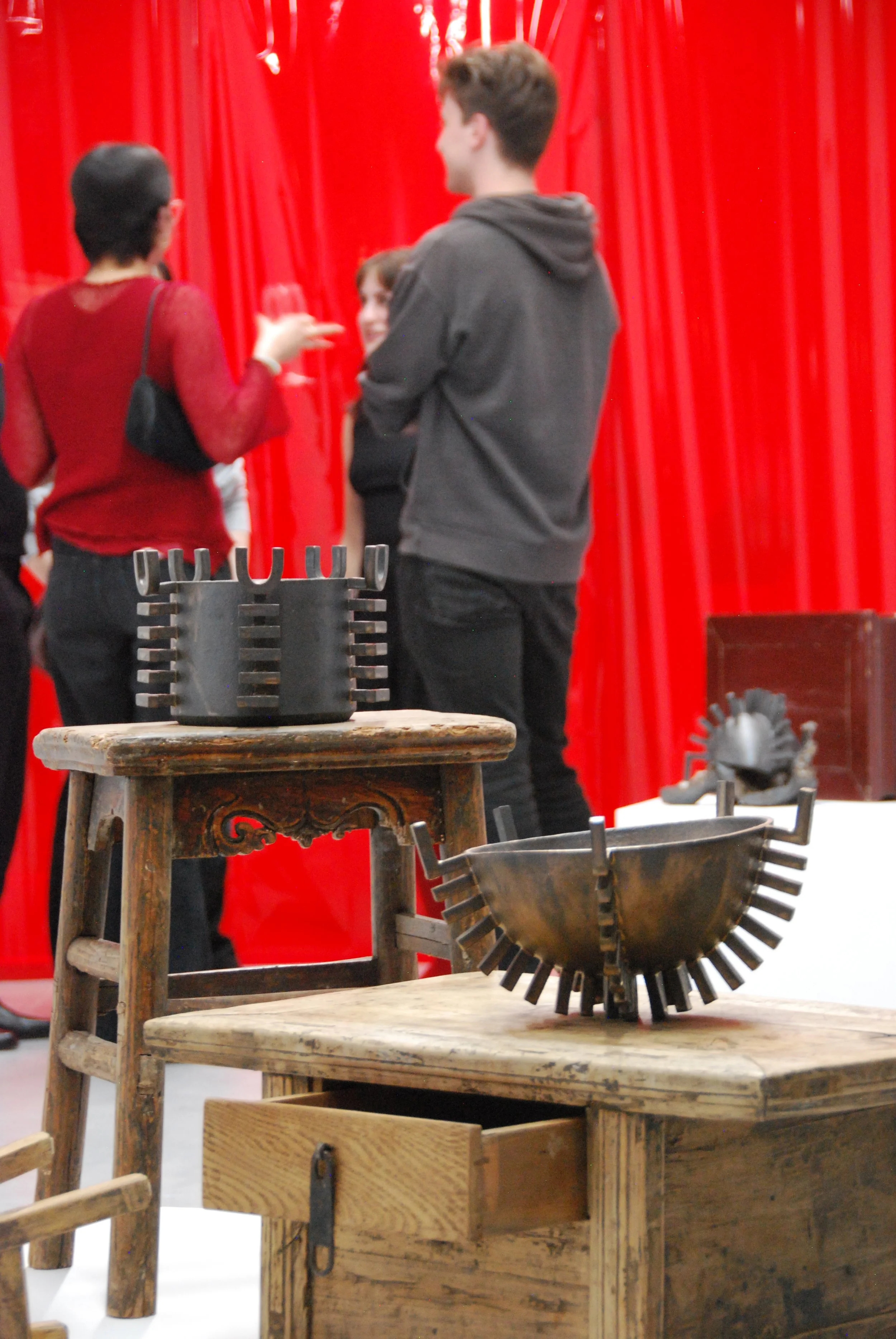
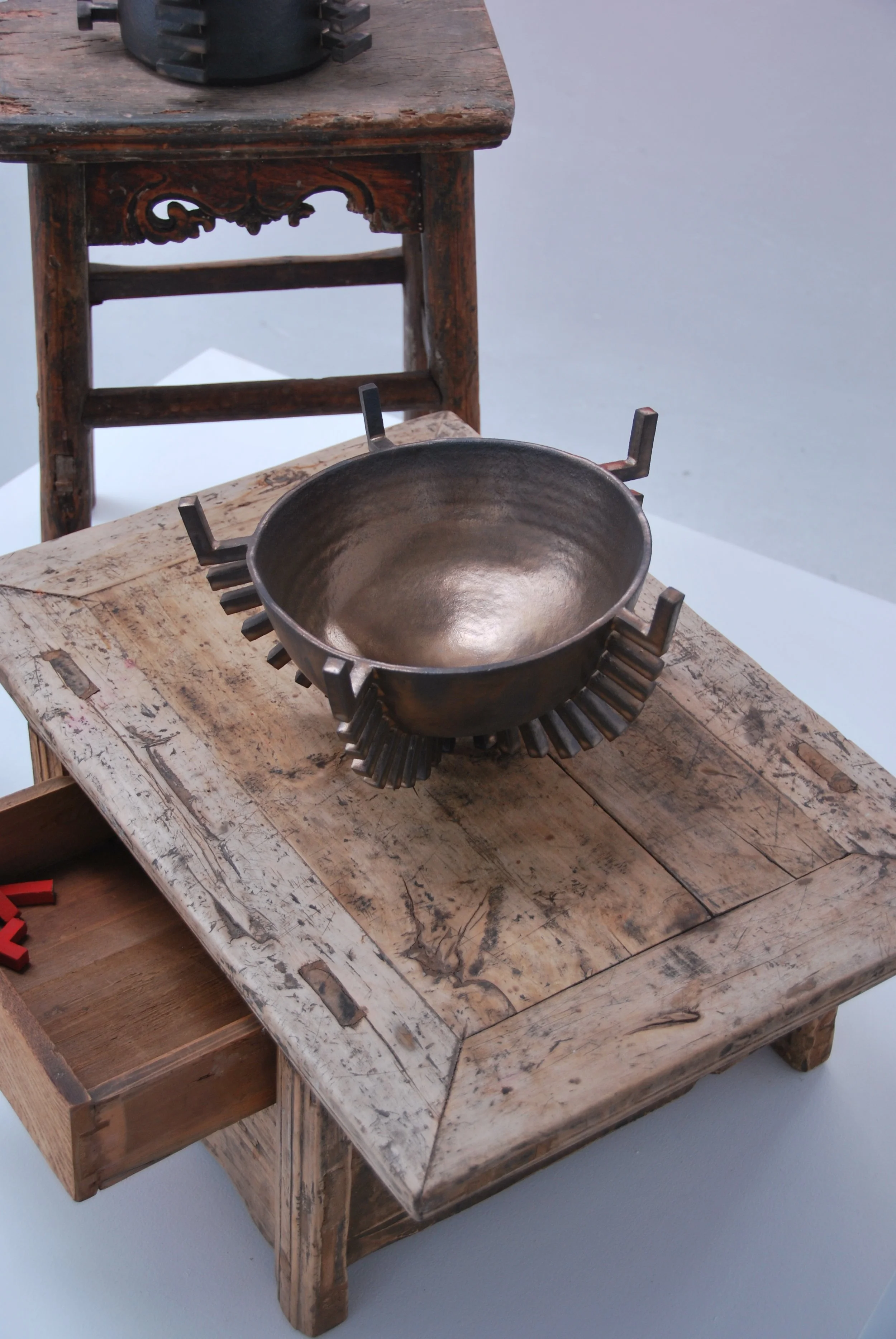
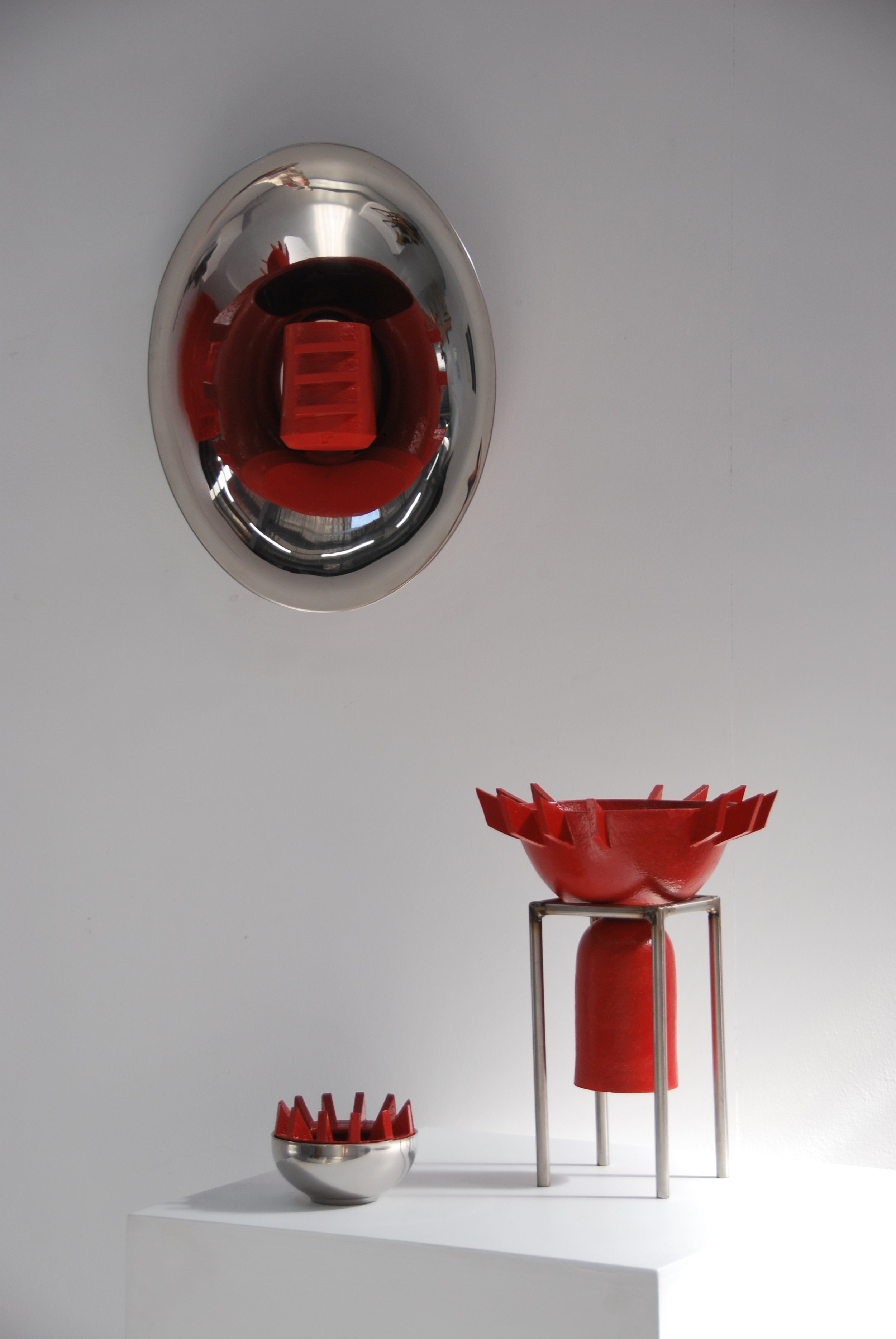
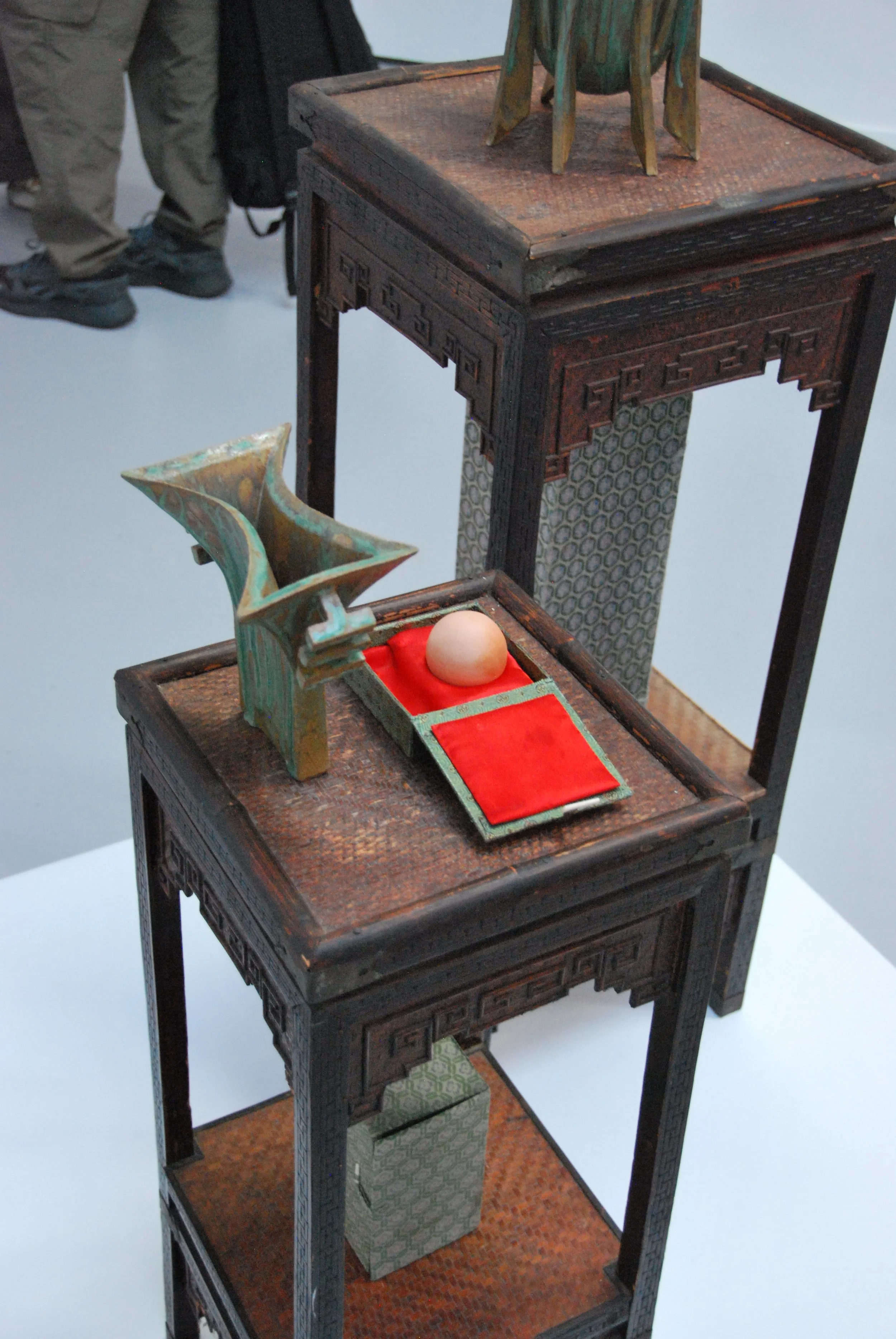
The artist's evolving relationship with clay mirrors this larger theme of transformation. Moving away from traditional functional ceramics, the works embrace more sculptural, conceptual forms, challenging ideas of permanence and fragility. The process of creation—shaped by the artist’s experience of chronic pain and a growing acceptance of change—becomes as important as the final pieces themselves. There is an invitation to reflect on the beauty of letting go, the shifting nature of identity, and the delicate balance between control and surrender.
This exhibition captures a moment of unexpected and profound evolution, where the boundaries between form and function, past and future, are fluid and constantly redefined.
红
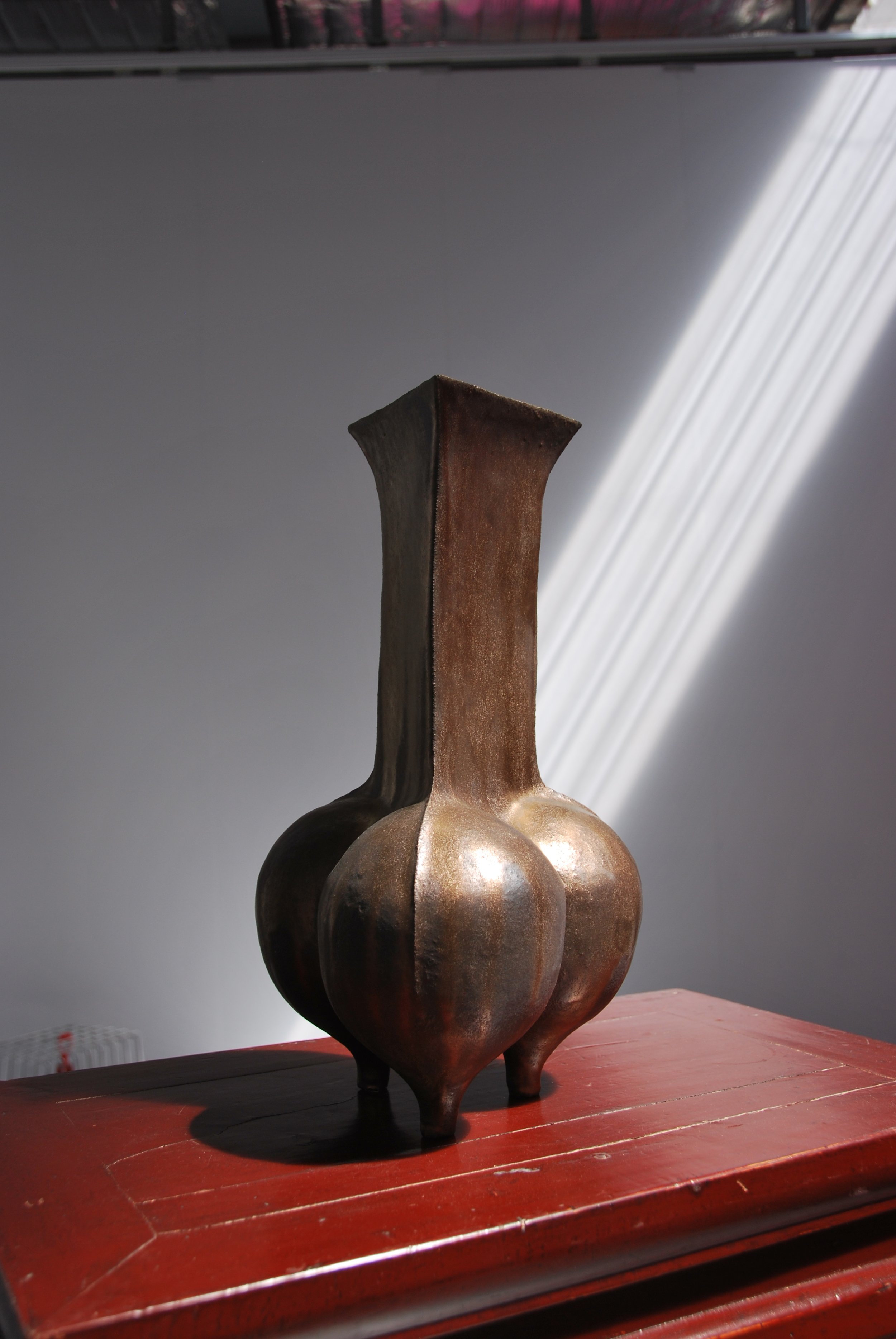
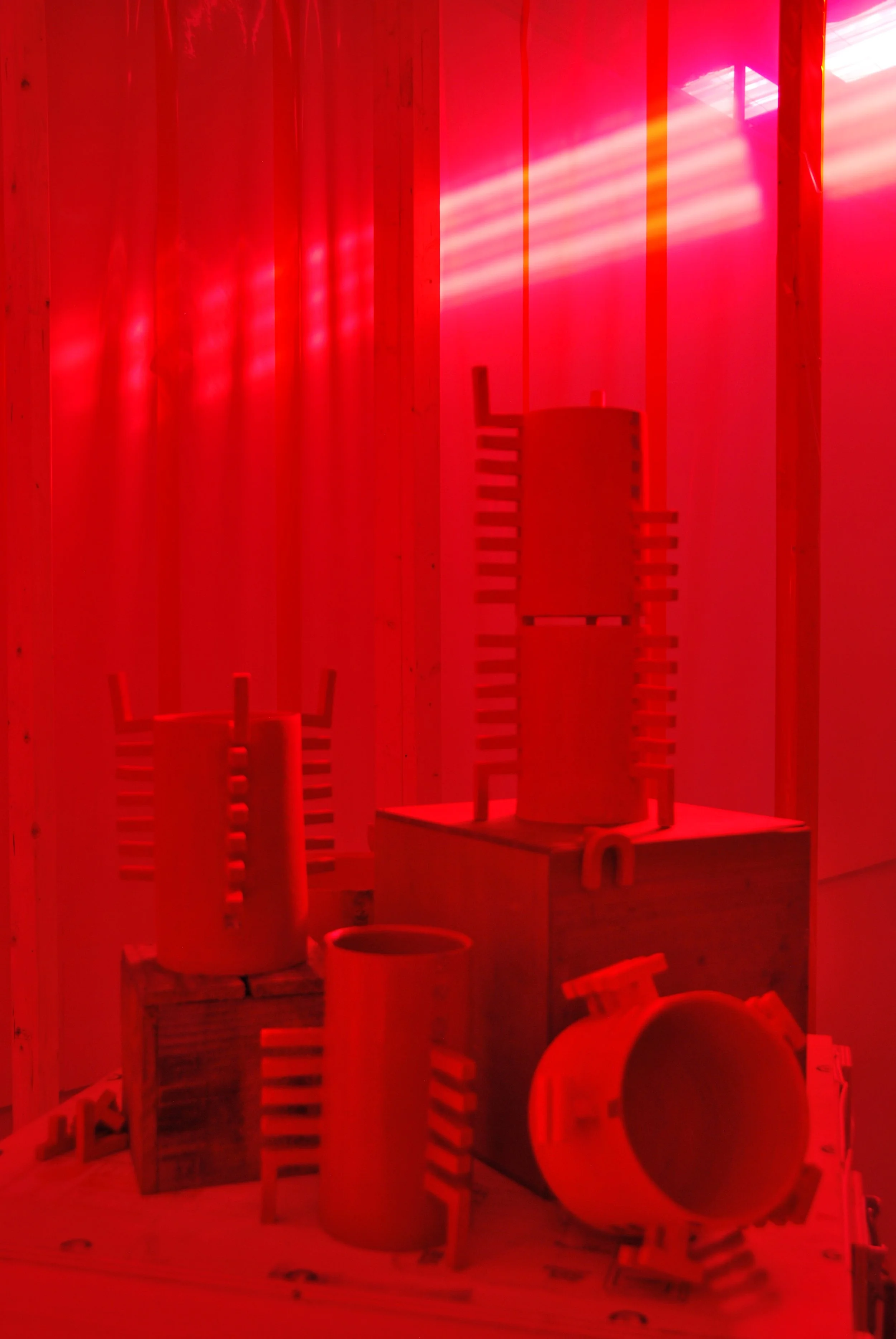
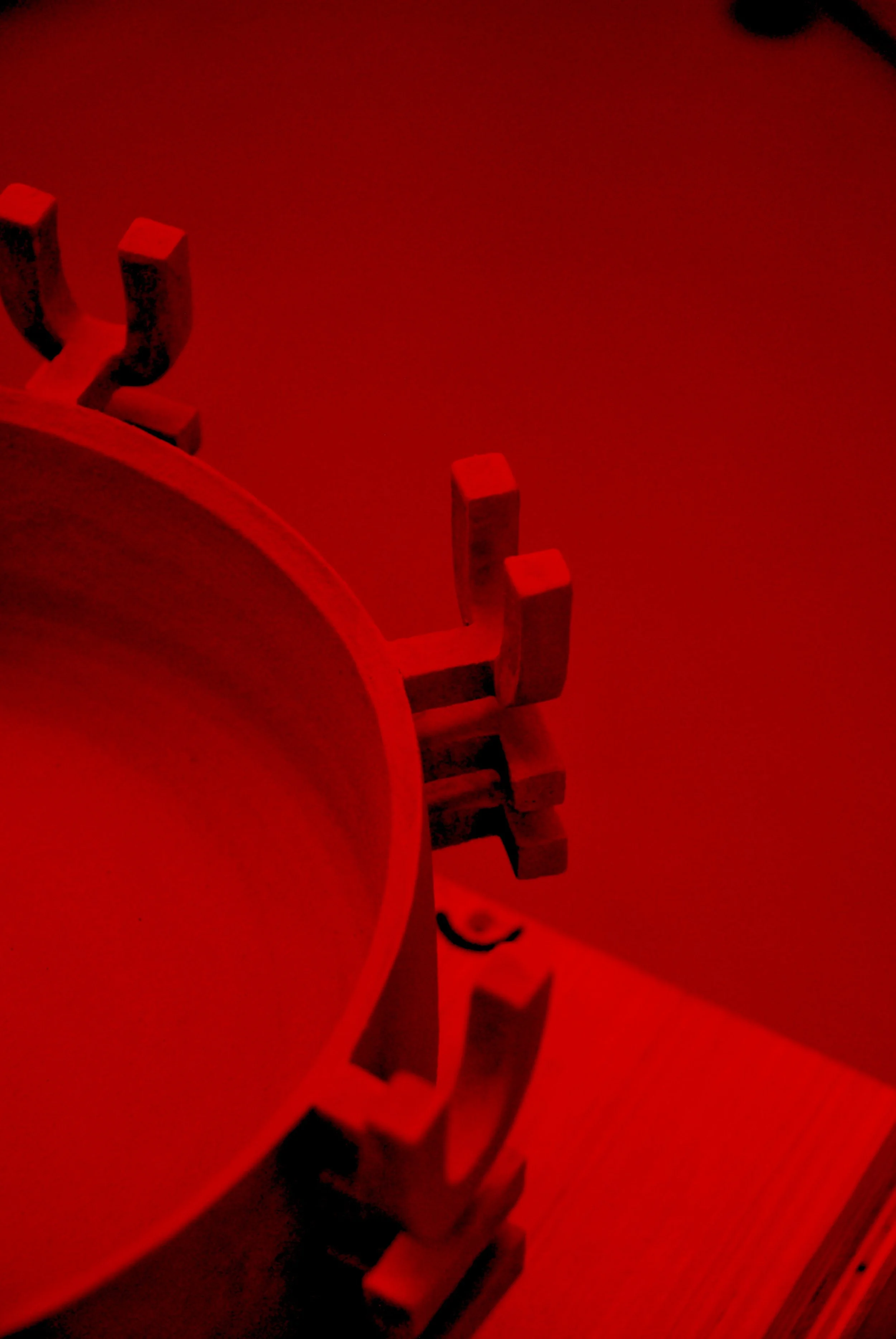
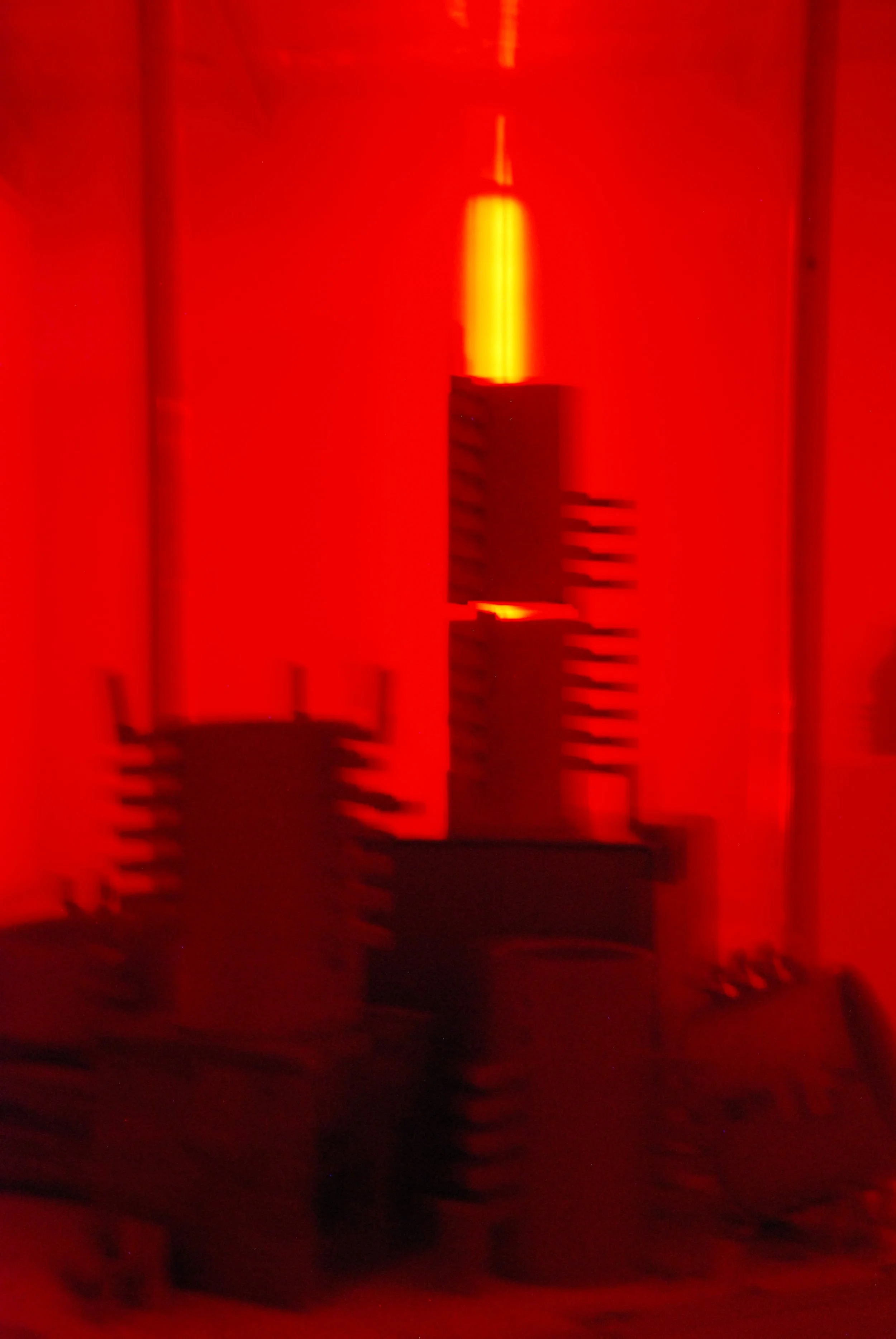
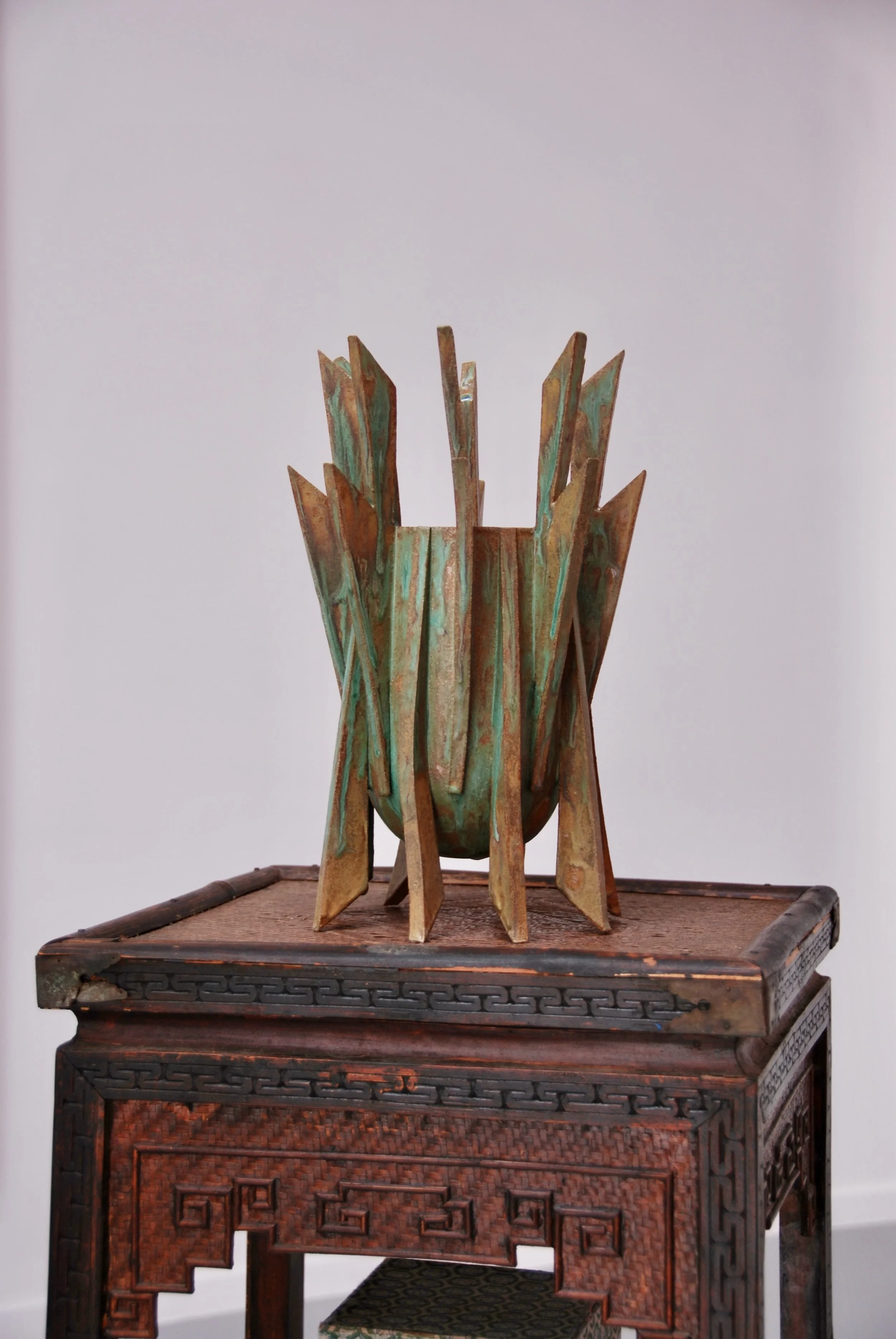
When a ceramicist throws a pot, they create form out of formlessness – a unique process of metamorphosis. The term throwing is drawn from an Old English word, thrawan, which means to twist, turn, or propel. As a gesture, throwing implies a sense of movement, a future destination, and an arc of time. For Theodosius Ng, throwing pots embodies a metaphoric propulsion, where their work with clay offers an act of becoming – an advance toward unrealised potential. 红, Ng’s first solo exhibition, is the stage for a speculative unfolding. Described as a ‘retrospective in reverse,’ this exhibition is an experiment in the prospective, presenting a new body of work that examines what Ng’s practice could become. Forming a testing ground, a series of bellied vessels, adorned with sharp lines and geometric precision that evokes the rawness of brutalist architecture, examine the present state of Ng’s work and visualise what might be yet to come.
The act of throwing, a spectacle imbued with drama and mystery, feels supernatural to an unknowing eye. Harnessing the ‘slip’ of water, a source of hydration to dry earth, the clay rises with the command of the wheel’s centrifugal force, levitating upward with an unsteady, undulating motion. The spiritual resonance of a potter at their wheel has long been revered, where through the act of transformation, ‘the successful man is elevated to the position of a magician, and eventually, by tradition, into that of a god.’ [1] As an extension of the mystical process of throwing, Ng’s forms are equally unknowable – unplaceable in time, origin, or function. In a play with magic and a celebration of queerness, a series of dichotomies dissolve – delicate and austere, familiar and other, minimal and maximal. Ng’s bold application of colour retains the authority of brutalist aesthetics while softening the inherent severity of such forms with a lean toward the decorative. Some pieces, glazed in lustrous bronze, evoke precious offerings and emphasise the allure of adornment. Others, glazed in a commanding shade of red, recall Ng’s Chinese Singaporean heritage, through the evocation of cinnabar seal paste and the symbol of prosperity and abundance. In a simultaneous act of transgression and reverence, 红 reflects an unconventional devotional practice – a series of memorialised offerings that equally honour, and depart from, the artist’s roots.
Clay retains the distinctly volatile essence of the natural world, where, morphing through a series of physical states, the likelihood of destruction is consistently unpredictable. As potter Benedict Fludd observes, ‘failure with clay is more complete and more spectacular than with other forms of art.’ [2] The teachings of clay – malleability, metamorphosis, and the precarious forms that result – can influence expectations held of the human body, softening the contemporary preoccupation with productivity and efficiency. In 红, care through practice is vital. Ng’s enduring relationship with clay has evolved alongside a journey with chronic pain, where, over time, the artist has learnt to lend the same patience and forgiveness to themselves as they do to their precarious creations. In a departure from their early work with functional ceramics, utility has been decentred, replaced by explorations of process, fluidity, and incompleteness.
Artist Edmund de Waal speaks of the ‘return to earth’ - the enduring gravitational pull that clay has had over artists, which has intensified in the face of accelerated innovation and the lack of tactility introduced by digital interfaces. [3] 红 reveals that ceramic practice is at once a grounding – the return to earth – as well as a return to self, to culture, to practice, and a motion toward something that has not yet become. At the wheel, Ng throws a new form, a new creation, and consequently, toward a new self.
[1] Charles Binns, quoted in Edmund de Waal, 20th Century Ceramics (London: Thames and Hudson, 2003), 14.
[2] Benedict Fludd in Katie Treggiden, Urban Potters (Brussels: Ludeon. 2017), 8.
[3] Edmund de Waal, 20th Century Ceramics, 42.

红 was presented at Sorse Gallery VIC between 8-24 November 2024. Photography: Jax Plumley.